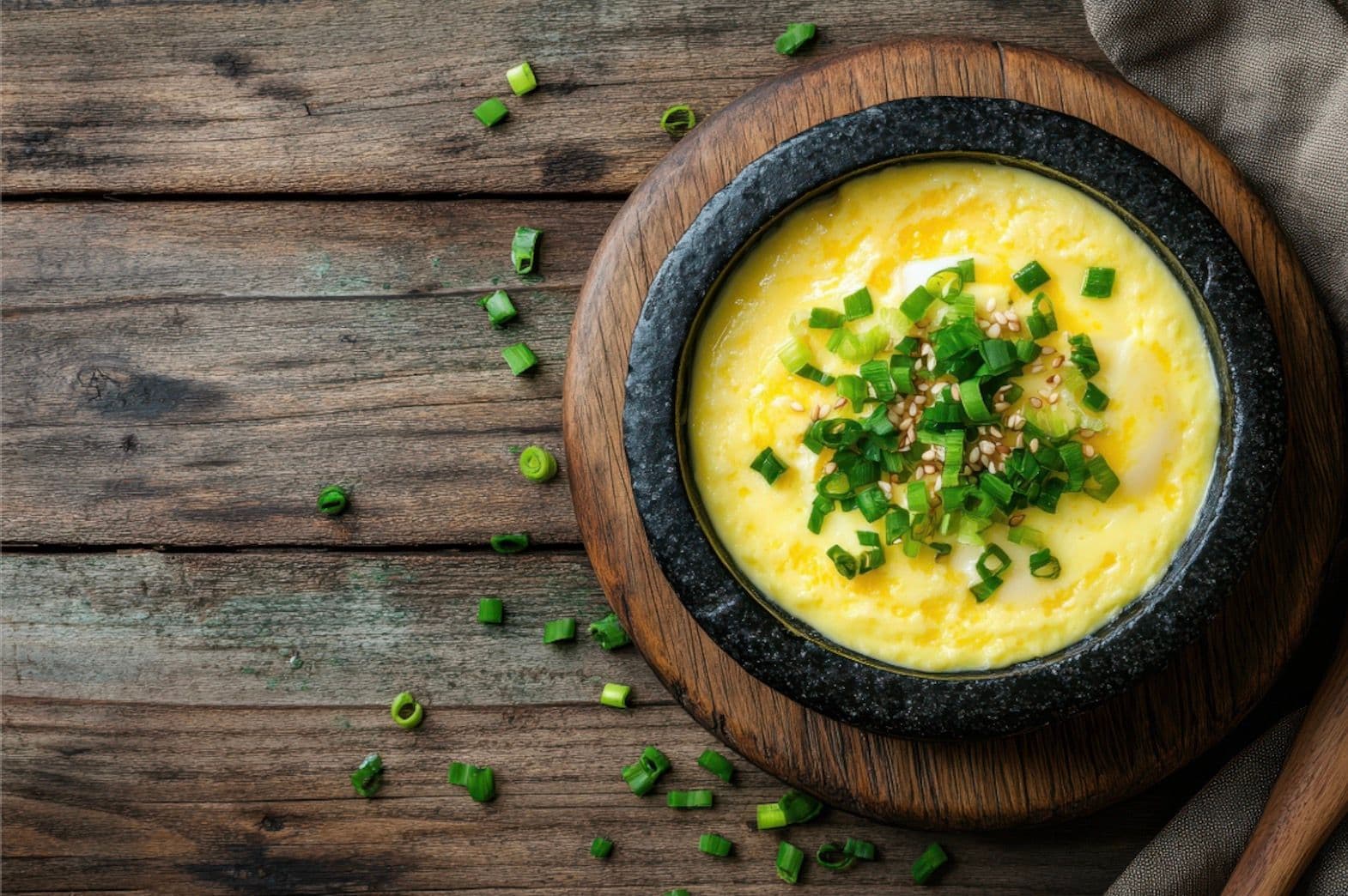
Gyeranjjim (Einfaches Koreanisches Gedämpftes Ei, 계란찜)
Ein einfaches Gyeranjjim Rezept mit Eiern, Wasser oder Brühe und Frühlingszwiebeln – weicher koreanischer Eierstich als Beilage zu Reis.
Meine Notizen zu diesem Rezept
In der koreanischen Küche sind Eier eine häufige Zutat für Beilagen. Während meines Aufenthalts in Deutschland habe ich festgestellt, dass auch Europäer Eier lieben! Dieses einfache gedämpfte Ei-Gericht ist ein klassisches koreanisches Rezept, das auf verschiedene Arten zubereitet wird. Heute teile ich eine einfache Methode für ein weiches und fluffiges Ergebnis.
Wenn Sie einen koreanischen Ttukbaegi (Ton-Topf) haben, sieht es authentischer aus. Aber auch ein kleiner Kochtopf oder ein Staub-Mini-Topf funktioniert perfekt. Das folgende Rezept ist ideal für 2 Personen, kann aber leicht verdoppelt oder verdreifacht werden.
So koche ich es
Brühe erhitzen
Wasser, Thunfischsauce und Matsul oder Mirin in einen kleinen Topf oder Ttukbaegi geben. Bei mittlerer Hitze erhitzen, bis die Flüssigkeit zu kochen beginnt.
Eier verquirlen
Die Eier in eine Schüssel aufschlagen und gründlich verquirlen, bis Eigelb und Eiweiß vollständig vermischt sind. So wird das Gyeranjjim später gleichmäßig weich und fluffig.
Eier einrühren
Die verquirlten Eier langsam in die kochende Flüssigkeit gießen und dabei kontinuierlich umrühren. Mit einem Löffel oder Spatel auch über den Topfboden gehen, damit das Ei nicht ansetzt. Weiterrühren, bis sich weiche, fluffige Eierflocken bilden.
Bei niedriger Hitze dämpfen
Sobald sich weiche Eierflocken gebildet haben, die Hitze auf die niedrigste Stufe reduzieren und den Topf mit einem Deckel abdecken. Das Gyeranjjim 3–5 Minuten sanft garen, bis die Oberfläche fest und nicht mehr flüssig ist.
Würzen und servieren
Sesamöl über das fertige Gyeranjjim träufeln und mit einer Prise schwarzem Pfeffer sowie fein gehacktem Daepa bestreuen. Den Deckel noch einmal auflegen und etwa 1 Minute ziehen lassen. Warm servieren, am besten zusammen mit Reis.
Was du als Nächstes kochen kannst
Dieses Rezept teilen
Teile den Link, einen kurzen Rezepttext oder ein Bild mit dem vorhandenen Rezeptfoto.
Für Pinterest vorbereiten
Lade das Bild herunter und füge Titel, Beschreibung und Link in die passenden Felder eines neuen Pins ein.
Prüfe den Text und wähle eine passende Pinnwand. Kennzeichne ein mit KI erstelltes oder bearbeitetes Originalfoto beim Veröffentlichen als KI-modifiziert.