Anleitung zum Kochen von Koreanischen Nudeln (국수삶기)
So werden koreanische Somyeon oder Jungmyeon richtig gekocht, abgespült und gekühlt, damit sie für Bibim Guksu und Janchi Guksu bissfest bleiben.
Meine Notizen zu diesem Rezept
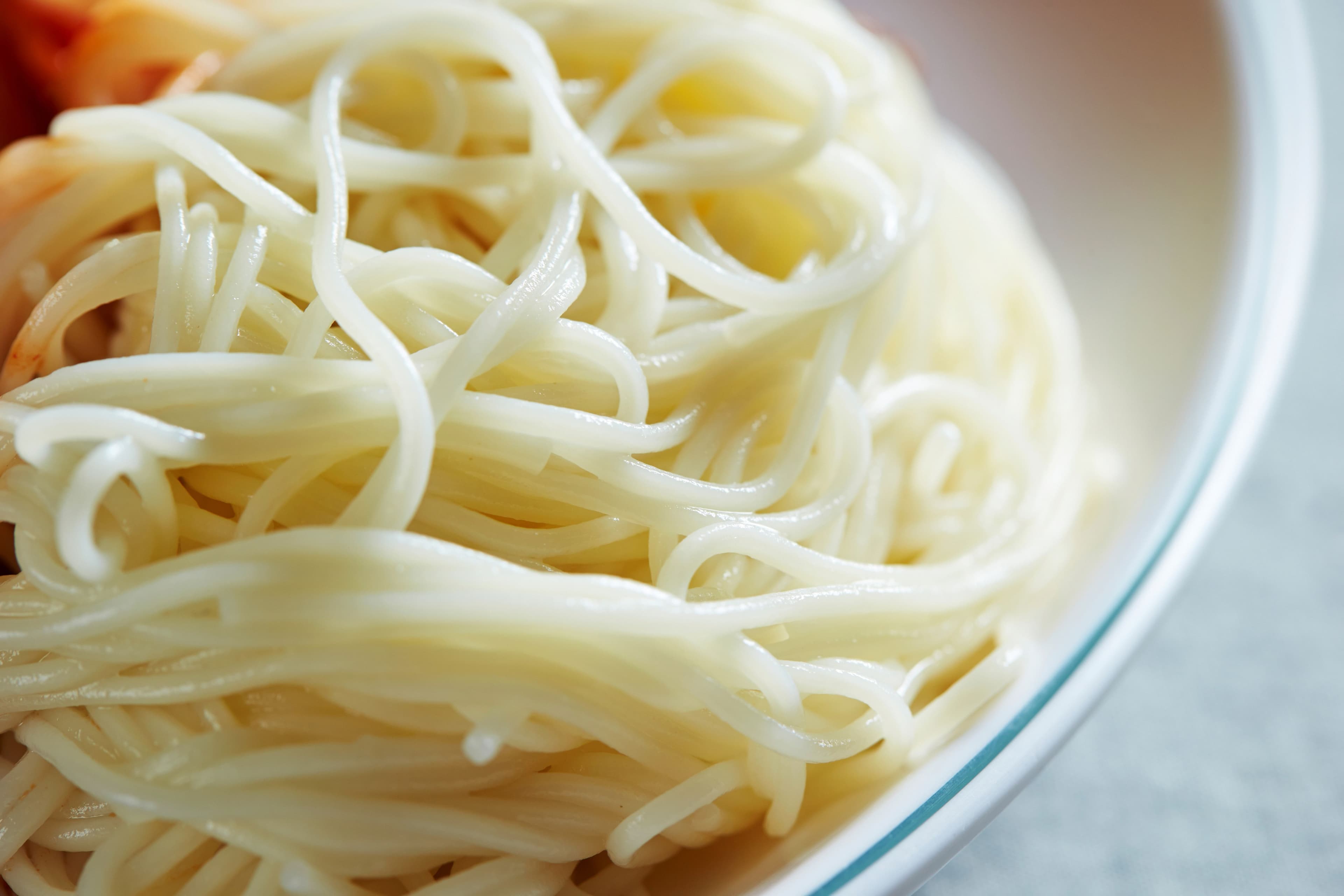
Koreanische dünne Nudeln (Somyeon) oder mitteldicke Nudeln (Jungmyeon) sind Grundzutaten in vielen koreanischen Gerichten. Gekochte Nudeln lassen sich für eine Vielzahl von Rezepten wie Bibim Guksu (scharfe Misch-Nudeln), Festnudeln oder gebratene Tintenfischnudeln verwenden.
Wenn ich nicht einfach zu einem Asia-Markt komme, nehme ich sehr dünne Pasta aus dem Supermarkt, die auf meiner Packung als Nr. 1 bezeichnet wird. Diese Sorte koche ich in gesalzenem Wasser etwa 3–5 Minuten und lasse sie dann abtropfen. Nummerierung und Kochzeiten unterscheiden sich je nach Marke und Dicke: Prüfe deine Packung und probiere eine Nudel vor dem Abgießen. Das ist eine praktische Alternative für koreanische gemischte Nudeln; die Konsistenz unterscheidet sich von Somyeon.
So koche ich es
Wasser zum Kochen bringen: Geben Sie 1 Liter Wasser in einen Topf und bringen Sie es zum Kochen.
Für Somyeon oder Jungmyeon gebe ich kein Salz ins Kochwasser. Für dünne Pasta als Ersatz verwende gesalzenes Wasser und richte dich nach der Packungsanweisung.
- 4:00
Nudeln kochen: Geben Sie die Nudeln ins kochende Wasser.
Somyeon: 3 Minuten 30 Sekunden–4 Minuten
Jungmyeon: 4–5 Minuten
Tipp: Verwenden Sie einen Timer, um ein Überkochen zu vermeiden.
Wenn ich nicht einfach zu einem Asia-Markt komme, nehme ich sehr dünne Pasta aus dem Supermarkt, die auf meiner Packung als Nr. 1 bezeichnet wird. Diese Sorte koche ich in gesalzenem Wasser etwa 3–5 Minuten und lasse sie dann abtropfen. Nummerierung und Kochzeiten unterscheiden sich je nach Marke und Dicke: Prüfe deine Packung und probiere eine Nudel vor dem Abgießen. Das ist eine praktische Alternative für koreanische gemischte Nudeln; die Konsistenz unterscheidet sich von Somyeon.
Die folgenden nummerierten Schritte gelten für koreanische Weizennudeln (Somyeon oder Jungmyeon). Wenn du stattdessen dünne Pasta verwendest, nimm gesalzenes Wasser und beachte ihre Packungskochzeit; die unten genannten Zeiten gelten nicht für Pasta.
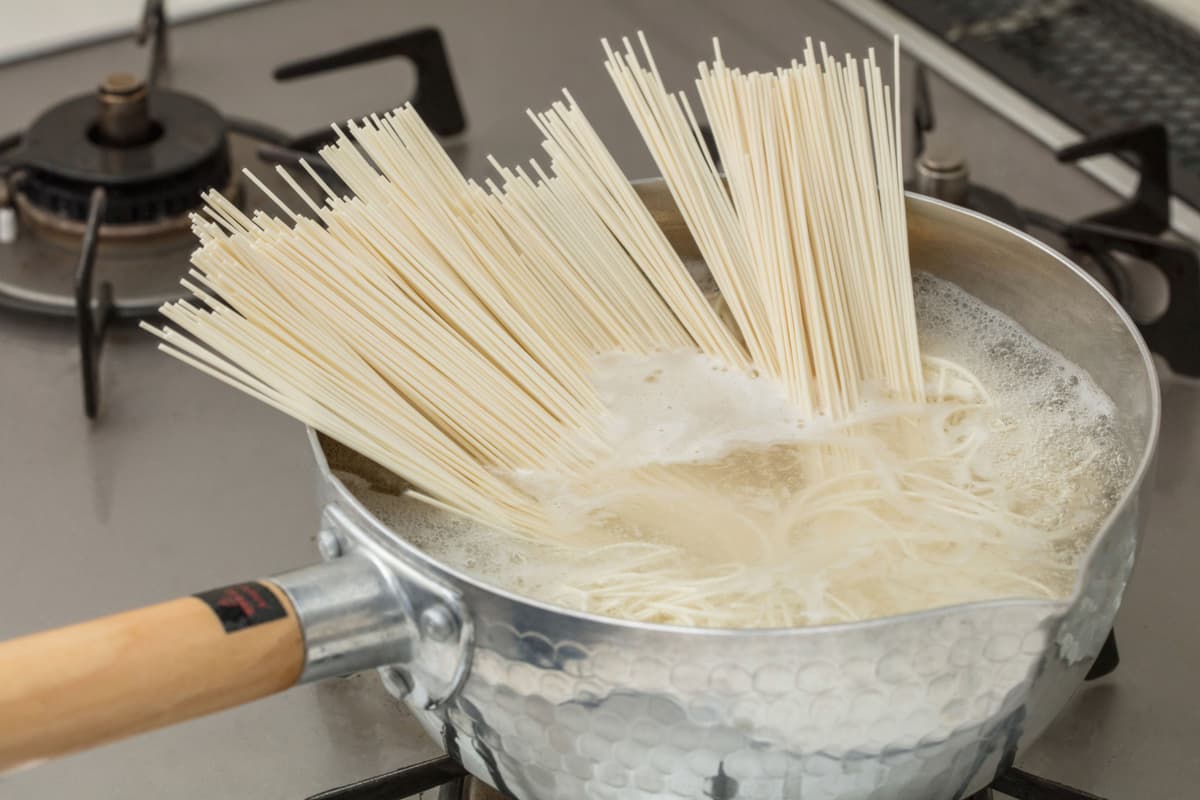
Schaum reduzieren: Während des Kochens kann Schaum aufsteigen.
Gießen Sie etwa 1/3 Tasse Wasser hinzu, um den Schaum zu reduzieren.
Dies trägt auch zu einer festeren Konsistenz der Nudeln bei.
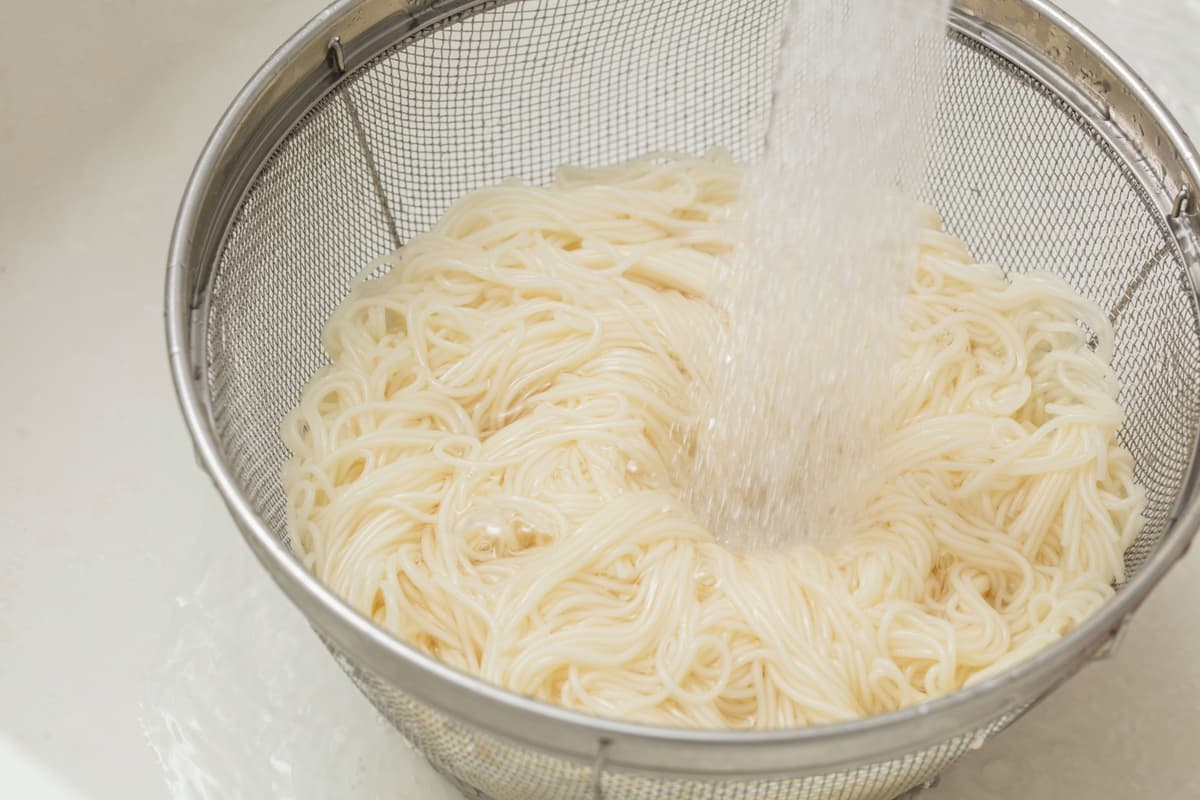
Nudeln abspülen: Lassen Sie die Nudeln abtropfen und spülen Sie sie zweimal mit kaltem Wasser ab.
So wird überschüssige Stärke entfernt und die Textur verbessert.
Servieren und Genießen: Verwenden Sie die vorbereiteten Nudeln für verschiedene Gerichte wie Festnudeln oder gebratene Rezepte.
Was du als Nächstes kochen kannst
Dieses Rezept teilen
Teile den Link, einen kurzen Rezepttext oder ein Bild mit dem vorhandenen Rezeptfoto.
Für Pinterest vorbereiten
Lade das Bild herunter und füge Titel, Beschreibung und Link in die passenden Felder eines neuen Pins ein.
Prüfe den Text und wähle eine passende Pinnwand. Kennzeichne ein mit KI erstelltes oder bearbeitetes Originalfoto beim Veröffentlichen als KI-modifiziert.