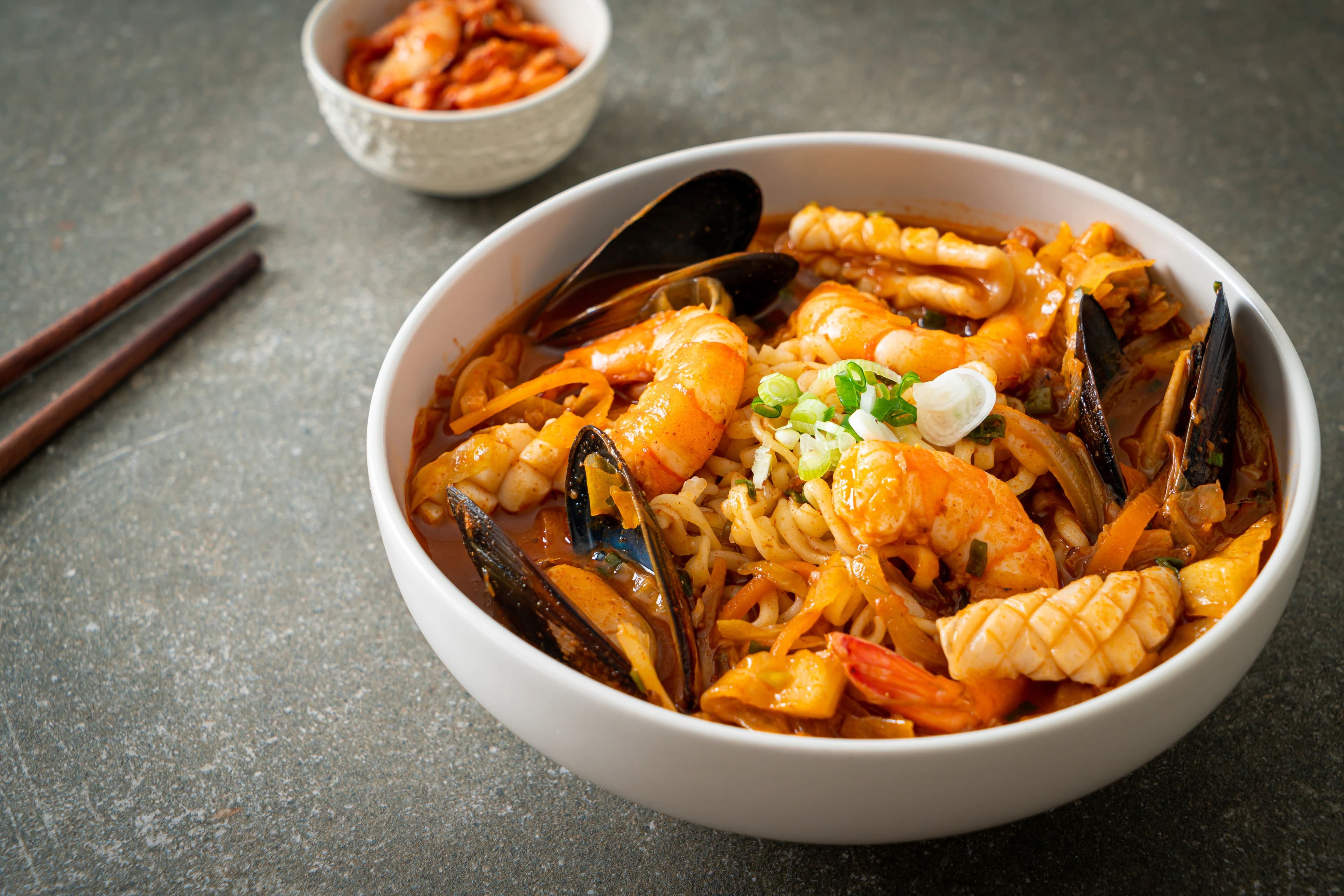
Jjamppong Pasta (koreanisch scharfe Meeresfrüchte-Pasta, 짬뽕 파스타)
Ein einfaches Jjamppong Pasta Rezept mit Pasta, Meeresfrüchten, Gemüse und scharfer koreanischer Sauce – würzig, herzhaft und perfekt für zu Hause.
Meine Notizen zu diesem Rezept
Jjamppong-Pasta
In Korea sind chinesische Restaurants unglaublich beliebt. Koreanische chinesische Restaurants werden jedoch nicht von chinesischen Köchen betrieben, sondern bieten Gerichte an, die die chinesische Küche auf koreanische Weise neu interpretieren. Es ist schwer zu erklären, aber wenn Sie Korea besucht haben, kennen Sie vielleicht Gerichte wie Jjajangmyeon (Schwarze-Bohnen-Nudeln), Jjamppong (scharfe Meeresfrüchte-Suppe) oder Tangsuyuk (Süß-Sauer-Schweinefleisch). Diese Gerichte sollten Sie unbedingt probieren!
In Deutschland gibt es ein sehr empfehlenswertes koreanisch-chinesisches Restaurant namens Joong Wha Ru in Frankfurt, das bei koreanischen Bewohnern äußerst beliebt ist und unglaublich lecker schmeckt.
Da ich nicht immer dorthin gehen kann, stelle ich Ihnen mein eigenes Rezept für Jjamppong vor, das mit Pastanudeln zubereitet wird. Dieses Gericht kochen wir mindestens einmal im Monat. Obwohl es das Originalrezept auf YouTube gibt, habe ich es an die in Deutschland leichter erhältlichen Zutaten angepasst.
So koche ich es
Meeresfrüchte vorbereiten
Gefrorene Meeresfrüchte oder Garnelen vollständig auftauen. Falls gewünscht, beim Auftauen einen kleinen Spritzer Essig ins Wasser geben, um den Fischgeruch zu reduzieren. Anschließend gut abtropfen lassen. Frische Meeresfrüchte können direkt verwendet werden.
Gemüse vorbereiten
Die Zwiebel in etwa 1 cm dicke Scheiben schneiden, die Daepa in fingerlange Stücke schneiden und den Chinakohl oder Weißkohl grob zerkleinern. Die Tomate fein hacken. Falls Sie Kirschtomaten verwenden, eine Handvoll ebenfalls fein hacken.
Pasta und Gemüse in den Wok geben
Die ungekochte Pasta in einen großen Wok oder einen breiten Topf geben. Zwiebel, Daepa, Kohl und die fein gehackten Tomaten dazugeben und alles gleichmäßig verteilen.
Würzen
Gehackten Knoblauch, Olivenöl, Sojasauce, Austernsauce, Hühnerbrühepulver, Sesamöl, Gochugaru und Salz hinzufügen. Für eine schärfere Variante mehr Gochugaru verwenden oder wie angegeben Cayennepfeffer und zerstoßene Peperoncini hinzufügen.
Wasser hinzufügen und aufkochen
1,5 Liter Wasser und, falls vorhanden, das Dashima in den Wok geben und alles bei hoher Hitze zum Kochen bringen. Das Dashima kann nach dem Aufkochen herausgenommen werden. Wenn Sie es gerne mitessen, können Sie es auch im Gericht lassen. Dabei die angegebene Kochzeit Ihrer Pasta beachten. Bei De Cecco Spaghetti No. 12 beträgt die Garzeit für al dente etwa 10 Minuten.
Meeresfrüchte hinzufügen und fertig garen
Sobald die Flüssigkeit kocht, die vorbereiteten Meeresfrüchte und nach Wunsch die Pilze hinzufügen. Alles etwa 10 Minuten köcheln lassen oder die Garzeit an die verwendete Pasta anpassen. Sobald die Pasta gar ist und die Meeresfrüchte vollständig gegart sind, heiß servieren.
Was du als Nächstes kochen kannst
Dieses Rezept teilen
Teile den Link, einen kurzen Rezepttext oder ein Bild mit dem vorhandenen Rezeptfoto.
Für Pinterest vorbereiten
Lade das Bild herunter und füge Titel, Beschreibung und Link in die passenden Felder eines neuen Pins ein.
Prüfe den Text und wähle eine passende Pinnwand. Kennzeichne ein mit KI erstelltes oder bearbeitetes Originalfoto beim Veröffentlichen als KI-modifiziert.