Doenjang Jjigae (Koreanischer Sojabohnenpasten Eintopf, 된장찌개)
Meine Notizen zu diesem Rezept
Meine Notizen zu diesem Rezept
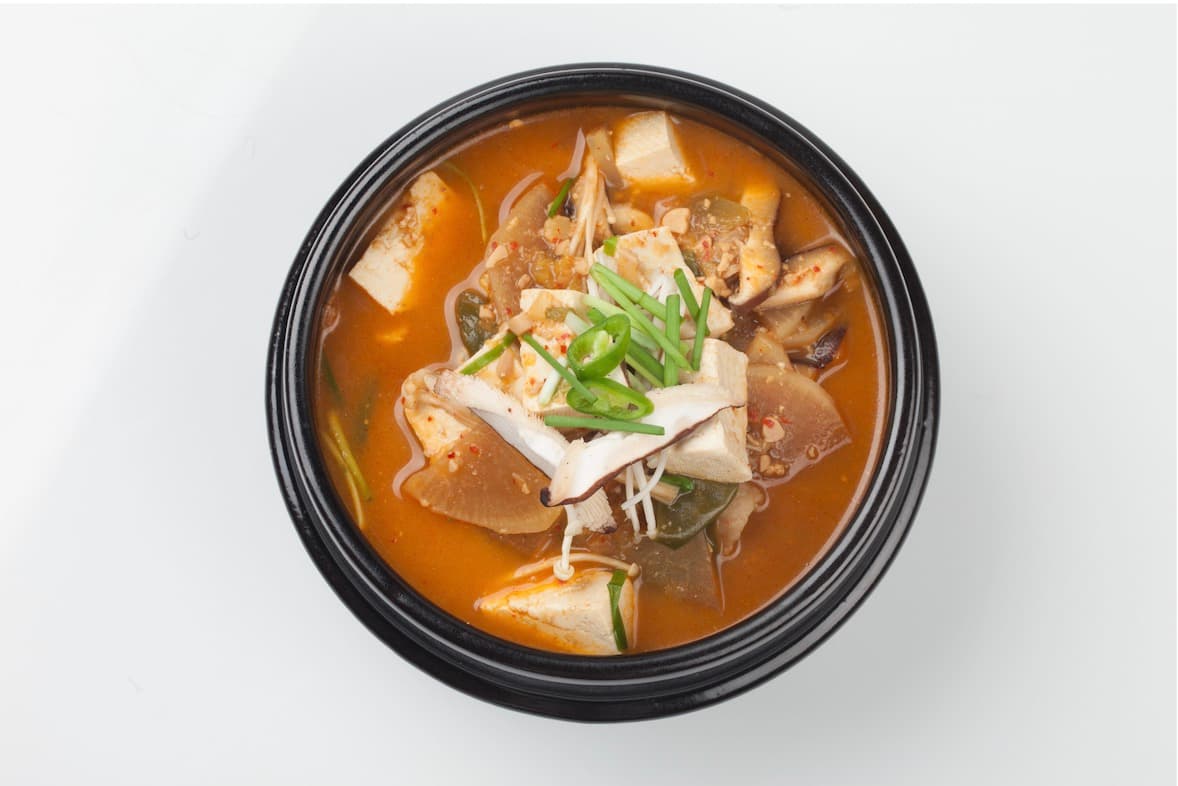
Ich mag auch japanische Miso-Suppe sehr gern, aber koreanisches Doenjang Jjigae ist für mich etwas anderes. Bei Doenjang Jjigae geht es nicht nur um die Brühe, sondern auch um die Zutaten im Topf: Zucchini, Tofu, Zwiebel, Pilze und manchmal Kartoffel.
Das ist meine einfache Alltagsversion. Ich mache keine komplizierte Brühe. Wenn ich Reiswasser habe, nehme ich Reiswasser. Wenn nicht, nehme ich einfach normales Wasser. Ich gebe Zwiebel und Frühlingszwiebeln direkt ins Wasser und lasse sie etwa 15 Minuten köcheln, damit sie eine einfache Basis für den Eintopf geben. Danach löse ich einen großen Löffel Doenjang in dieser Brühe auf. Dann kommen die restlichen Zutaten dazu und alles darf zusammen blubbern.
Karotten gebe ich in Doenjang Jjigae normalerweise nicht hinein. Zucchini, Kartoffel, Pilze und Tofu passen viel besser. Wenn du mehr Tiefe möchtest, kannst du getrocknete Sardellen, etwas Schweinefleisch oder Rindfleisch mit Zwiebel und Frühlingszwiebeln mitköcheln lassen. Für eine vegetarische oder vegane Version lässt du das einfach weg.
Optional, wenn du mehr Tiefe möchtest
- Ein paar getrocknete Sardellen - oder 100 g Schweinefleisch - oder 100 g Rindfleisch
Meine Hinweise
- Karotten gebe ich in Doenjang Jjigae eigentlich nicht hinein. - Reiswasser macht die Brühe etwas weicher und runder. Wenn du keins hast, ist normales Wasser aber völlig in Ordnung. - Enoki-Pilze findet man inzwischen oft leicht. Shiitake passt auch sehr gut, ist in Deutschland aber manchmal etwas teuer.
So koche ich es
Zwiebel in grobe Stücke schneiden. Frühlingszwiebeln in größere Stücke schneiden. Zucchini, Kartoffel und Tofu in mundgerechte Stücke schneiden. Pilze putzen und bei Bedarf kleiner schneiden.
800 ml Reiswasser oder normales Wasser in einen Topf geben. Reiswasser ist das milchig-weiße Wasser vom Waschen von Reis. Am besten nimmt man das zweite oder dritte Waschwasser, nicht das erste.
- 15:00
Zwiebel und Frühlingszwiebeln in den Topf geben und etwa 15 Minuten leicht köcheln lassen. Das gibt dem Eintopf eine einfache Basis, auch ohne fertige Brühe oder koreanische Brühewürfel.
Einen großen Esslöffel Doenjang in die heiße Brühe geben und gut verrühren, bis sich die Paste aufgelöst hat.
Kartoffel, Zucchini und Pilze in den Topf geben. Alles bei mittlerer Hitze köcheln lassen, bis die Kartoffel fast gar ist.
- 7:00
Tofu vorsichtig dazugeben und weitere 5–7 Minuten köcheln lassen. Nicht zu stark rühren, damit der Tofu nicht zerfällt.
Wenn du den Eintopf etwas schärfer magst, kannst du 1/2 Esslöffel Gochujang oder 1/2 Esslöffel Gochugaru einrühren. Für eine noch würzigere, schärfere Version passen auch frische scharfe Chilis.
Wenn der Eintopf zu mild schmeckt, noch etwas Doenjang einrühren. Heiß mit Reis servieren.