Finding the ingredients
Many Korean pantry ingredients are easiest to find in Asian grocery stores or online. Fresh ingredients can often be replaced with supermarket options.
Hansik YoungKorean cooking at home
This recipe is designed for home cooking with clear steps, linked ingredients, and practical shopping notes.
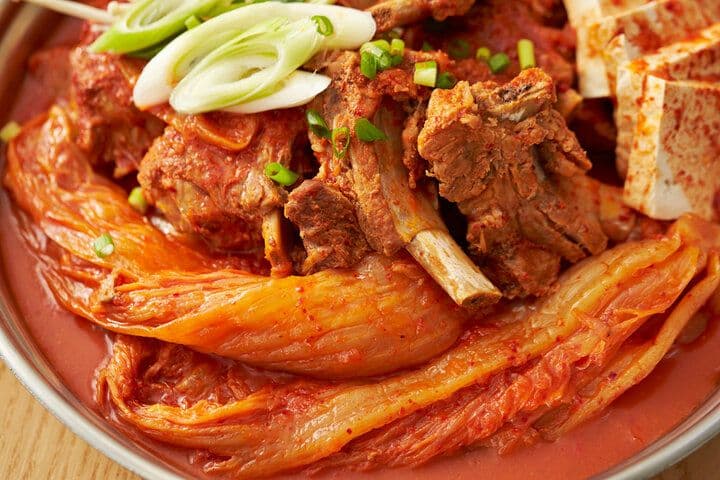
Kimchi Jjigae is a simple Korean kimchi stew that tastes best with well-fermented kimchi. This recipe includes two easy versions: a hearty pork kimchi stew and a quick tuna kimchi stew. The base is Jongga pogi kimchi, onion, a little sugar, and rice water or water. It is warm, simple, and perfect with steamed rice.
Many Korean pantry ingredients are easiest to find in Asian grocery stores or online. Fresh ingredients can often be replaced with supermarket options.
Slice the onion. Depending on its size, use half an onion to one whole onion.
For the pork version, add a little neutral oil to a pot. Briefly sauté the onion, then cut 200–300 g pork into bite-sized pieces and brown it together with the onion. If using pork belly, you can also sear it in one piece first and slice it afterward.
Add 500 g Jongga Pogi Kimchi and briefly mix it with the onion and pork. Do not fry it for too long; it should just combine well.
Add about 10 g sugar, roughly one Korean spoonful. Stir briefly.
Pour in 800 ml water or, if you have it, rice water. Rice water gives the stew a slightly rounder flavor.
Boil the stew over high heat for about 15 minutes.
Reduce the heat to medium-low and simmer for another 30 minutes, until the flavor becomes deep and well-rounded.
Serve hot with rice. If you use much more than 300 g pork, the dish becomes more like Kimchi Jjim, a braised kimchi dish, rather than a classic stew.
1. Slice the onion. Depending on the size, use half an onion to one whole onion.
2. For the pork version, add a little neutral oil to a pot. Briefly sauté the onion, then cut 200–300 g pork into bite-sized pieces and brown it together with the onion. If using pork belly, you can also sear it in one piece first and slice it afterward.
3. Add 500 g Jongga Pogi Kimchi and briefly mix it with the pork and onion. Do not fry it for too long; it should just combine well.
4. Add about 10 g sugar and stir briefly. This is roughly one Korean spoonful.
5. Pour in 800 ml water or rice water. Rice water works especially well because it gives the stew a rounder flavor.
6. Boil over high heat for about 15 minutes. Then reduce the heat to medium-low and simmer for another 30 minutes.
7. Serve hot with steamed rice.
Tuna version: For the tuna version, use the oil from one can of tuna to sauté the onion. Then add the kimchi and the canned tuna. The rest of the recipe stays the same.
Optional: Tofu is not part of my basic recipe, but it works well as an addition. If you want to add tofu, add it near the end so it does not fall apart.
Note: If you use much more than 300 g pork, the dish becomes more like Kimchi Jjim, a braised kimchi dish, and less like a classic Kimchi Jjigae stew.
Yes. Read the steps once and prepare the ingredients before you start cooking.
Asian grocery stores, Korean online shops, and large supermarkets with an Asian section are the easiest places to start.